Led design across multiple products at Estater — evolving from a single designer with no formal process into a design function that shaped product strategy, built a capable team, and established a scalable system across a complex B2B platform suite.
01 — Context
Day one: no design function, two evolving products, and a company that needed both.
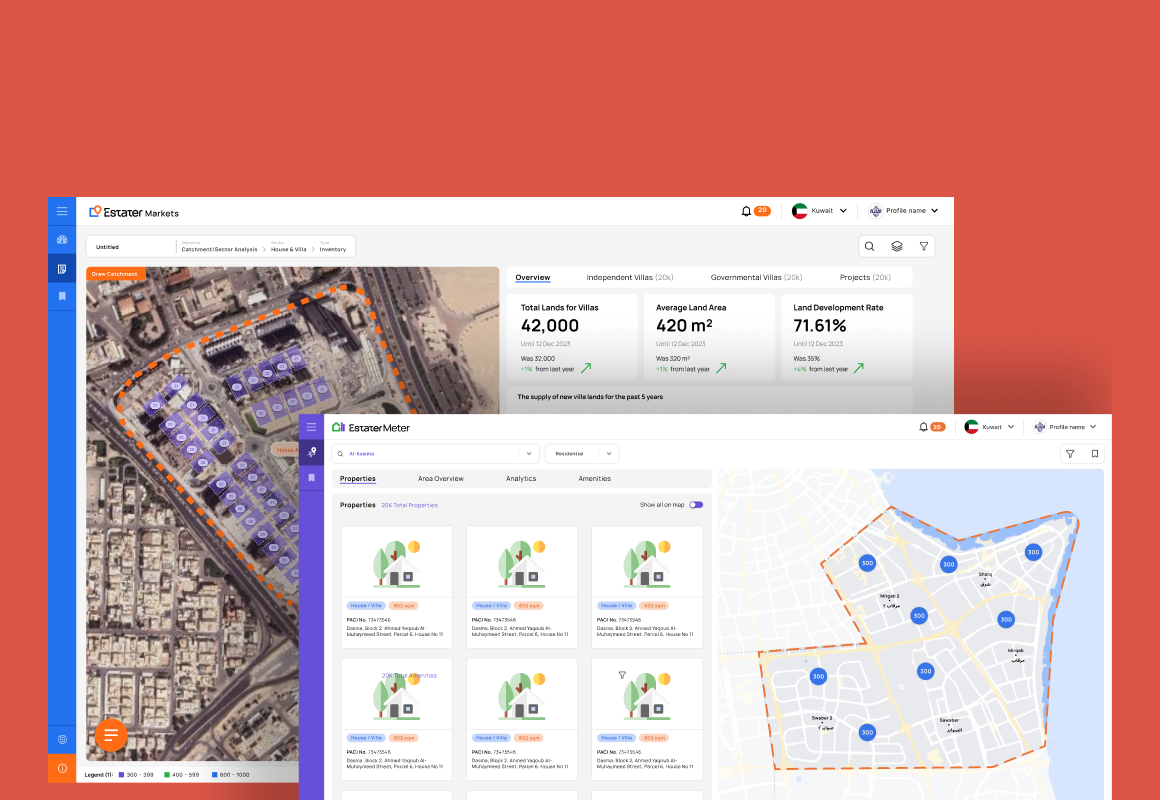
When I joined Estater in 2022, there was no formal design presence. Products were being built and evolved — Markets was growing in scope, Meter existed but lacked cohesion — without a designer who owned the experience across either of them. There was no design system, no shared vocabulary between design and engineering, and no structured process for how product decisions were made.
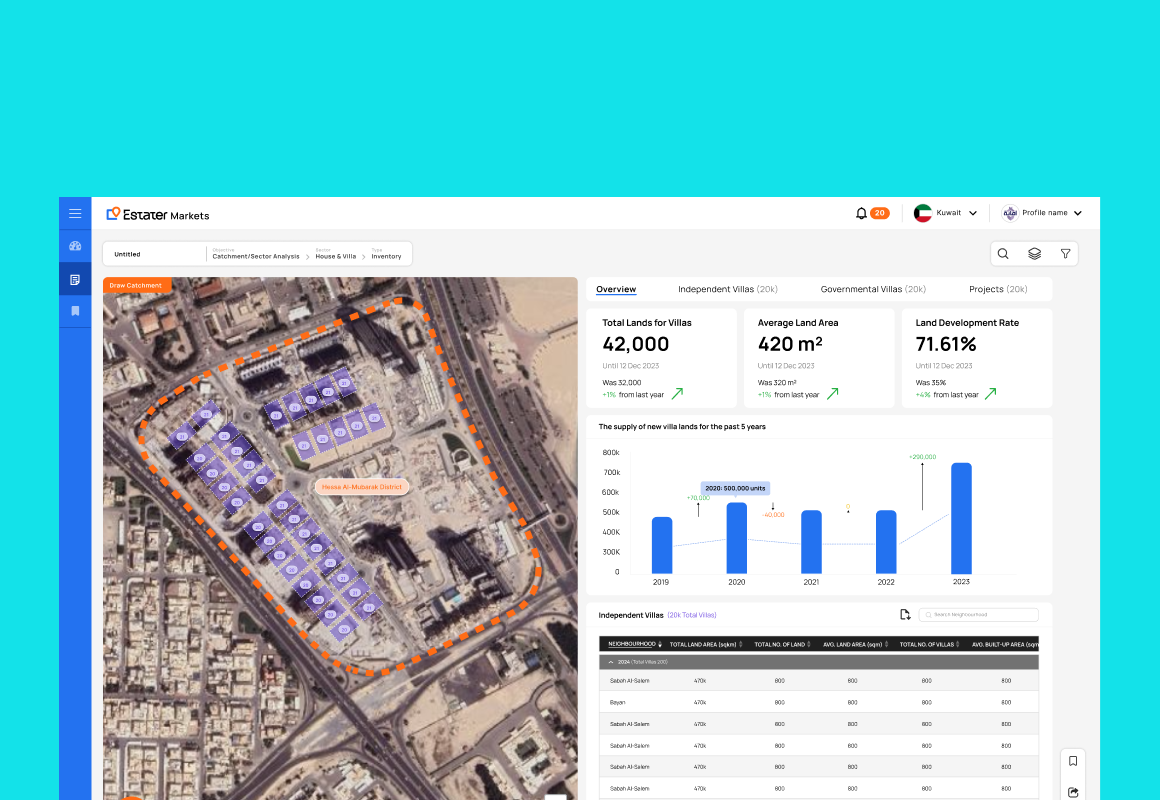
The company was also growing. The product complexity was accelerating. And as Markets moved from a static reporting tool toward an analytics platform, the design demands increased in ways that a single person — with no established infrastructure — couldn't sustain indefinitely.
This case study is about how that changed. Not just what was designed — the other five case studies cover that — but how design as a discipline, and a function, was built from the ground up alongside the products it served.
02 — The Problem
Design wasn't missing. A design function was.
The distinction matters. In 2022, design decisions were being made constantly — by engineers making layout calls, by product stakeholders prioritizing features, by nobody when it came to interaction models. The problem wasn't that nobody cared about design. It was that design had no structural home, no process, no voice in early decisions, and no way to compound its impact across products.
03 — Building the Team
From a team of one to a structured, scalable design capability.
Building design capacity at a growing company isn't just about adding headcount — it's about knowing what kind of capacity is needed, when, and how to integrate it without creating coordination overhead that slows down execution. The expansion happened in phases, each one prompted by a genuine bottleneck in the product work.
Phase 1 · Prove the value soloBefore asking for a team, I established the quality bar by shipping the first Markets transformation single-handed — earning the trust and the evidence that made the case for investing in design.
Phase 2 · Add capacity where it hurtDesigners were brought in against specific bottlenecks — parallel product work, the rebrand — rather than headcount for its own sake, so every hire relieved a real constraint.
Phase 3 · Structure for scaleAs the team reached nine, I introduced shared standards, design reviews, and a component system so people could work in parallel across products without the work drifting apart.
04 — Key Contributions
Five ways design shaped the organization, not just the product.
Gave design a seat in strategyMoved design into roadmap and prioritization conversations — so product direction was shaped with design in the room, not handed to it afterwards.
Built the teamGrew design from a single person into a structured team of nine, hired and onboarded against real product bottlenecks.
Established the design systemCreated the shared tokens, component library, and consistency framework that every Estater product now builds on.
Set the processIntroduced structured handoffs, design reviews, and decision frameworks that cut the back-and-forth between design and engineering.
Raised the craft barSet a visible quality standard by example and mentored the team to hold it — so the bar stayed high as the group grew.
05 — Cross-Functional Collaboration
Design that stayed grounded by working closely with everyone else.
One of the risks of design growing its organizational footprint is that it becomes isolated — producing designs that don't account for what engineering can build, what data can surface, or what business can support. Avoiding that required building genuine working relationships across every function, not just managing design output.
EngineeringShared specs, component libraries, and constraint-aware handoffs so design intent survived implementation — and engineers weren't left guessing at the details.
Product & foundersSat in roadmap and prioritization decisions, translating design calls into business outcomes leadership could act on.
Data & BI teamsPartnered on the Power BI integration and data visualization, so reporting and spatial layers were both accurate and genuinely usable.
Sales & clientsTurned client and demo feedback into design decisions — and gave the sales team a sharper, more confident product narrative.
06 — Leadership Approach
Four beliefs that shaped how I led design — not just what I designed.
01 · Stay close to the workIn an early-stage company the quality bar is set by example, not just by feedback. I kept designing alongside the team rather than stepping fully back into direction.
02 · Build systems, not just screensInvest in what compounds — tokens, components, process — even under shipping pressure, because that's what lets a small team punch above its weight.
03 · Design earns its seat by outcomesTo be in the room early, design has to speak in business results, not design jargon. Framing decisions as outcomes is what moved design upstream.
04 · Make design able to happen without youThe goal of leadership is a team and a system that keep producing good design after you've gone — so I mentored and structured for exactly that.
The Decision I Owned
With products to ship and a team of one, the easy path was to stay heads-down on features. I chose instead to invest in the compounding layer — a design system, a hiring plan, and a seat in roadmap decisions — even when it cost near-term output. Betting on infrastructure over immediate delivery is what turned a solo designer into a design function.
07 — The Work This Leadership Enabled
Five case studies. One design function behind all of them.
Every product shift covered in this portfolio was made possible by the same thing: design that had the organizational standing, the cross-functional relationships, and the systematic foundation to take on complex problems and see them through.
08 — Impact
What the design function became — measured in product and organizational outcomes.
5Major product transformations led end-to-end
9×Growth in design capacity (1 → structured team)
40%Reduction in design-to-dev cycle time
2yrsTo build a scalable design function from zero
Design became a key part of product strategyBy the end of this engagement, design decisions were being made in roadmap conversations — not after them. The shift from "design as a service" to "design as a strategic voice" was the most significant organizational outcome of the two years.
Design and development workflows became more efficientStructured handoffs, shared component libraries, and clearer decision frameworks reduced the back-and-forth between design and engineering. Teams spent less time on alignment and more time on building.
A scalable design foundation was left behindThe token system, component library, consistency framework, and team structure were all designed to outlast this specific engagement. Any new product Estater builds can begin from a shared design foundation rather than a blank page.
A stronger, more coherent product ecosystemMarkets and Meter no longer felt like separate tools built by separate teams. They felt like a suite — which made enterprise clients more confident in Estater as a long-term platform partner, not just a software vendor.
09 — Challenges
Building while running — the hardest part of design leadership.
C1 · Building structure without slowing executionEstablishing processes, documentation, and systems takes time that is directly competed for by the immediate product work that needs to ship. Every hour spent building the design system is an hour not spent on a specific feature. The balance — investing in compounding infrastructure while meeting near-term deliverables — required constant prioritization judgment.
C2 · Staying hands-on while becoming more strategicAs the design function grew, the temptation was to step back from execution and focus purely on direction. But in an early-stage company, the most effective design leaders stay close to the work — making the quality bar visible by example, not just by feedback. Finding the right ratio of doing versus directing required ongoing calibration.
C3 · Aligning multiple teams with different prioritiesEngineering optimizes for buildability. Business optimizes for revenue. Data teams optimize for accuracy. Design tries to optimize for all three simultaneously, through the lens of user experience. Holding that synthesis position — without becoming a bottleneck — required a combination of clear communication, shared frameworks, and genuine relationships built over time.
C4 · Scaling design without a predefined playbookThere was no existing design leadership framework to follow. Every structural decision — when to hire internally versus externally, how to structure reviews, how to manage a shared component library across products — was made without precedent at Estater. Figuring out what the right model was, while running the design function day-to-day, was the defining challenge of this role.
10 — What This Taught Me About Leadership
The lesson that only comes from building something from nothing.
Good design leadership isn't about controlling output. It's about creating the conditions where good design can happen without you — and keep happening after you're gone.